
Why Does My Blonde Turn Brassy? Toner vs. Gloss Explained
You left the salon with a clean, bright blonde. A few weeks later, you catch yourself in the mirror on a bright morning, and it looks warmer than you remember. Yellow at the crown. Maybe a little orange near the ends.
That is brassiness, and it is one of the most common blonde complaints. The good news is that it is usually fixable, and often preventable.
Here is why blonde turns brassy, how a toner differs from a gloss, and how often to book one.
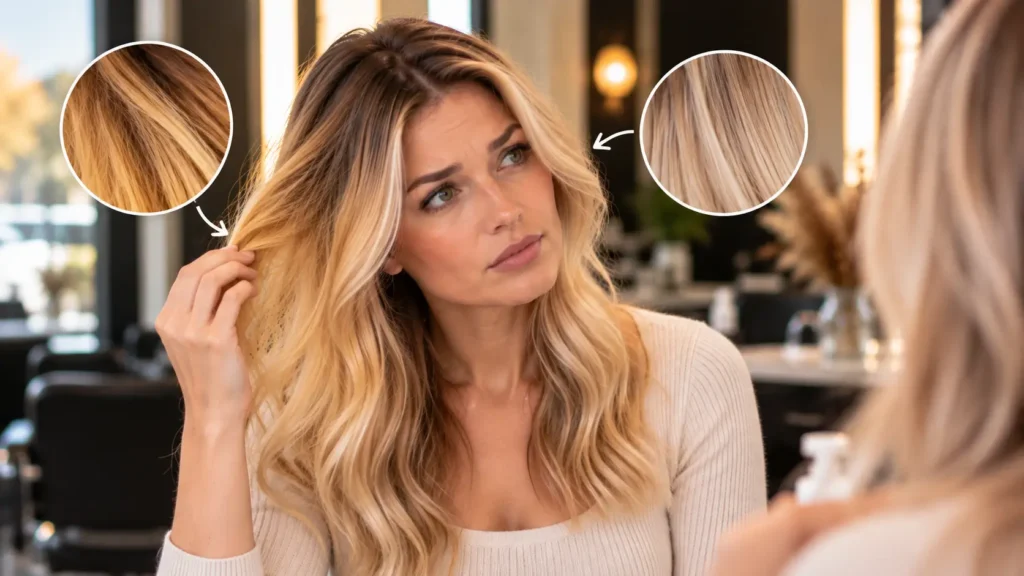
Why does blonde hair turn brassy?
Lightening exposes warm undertones in your hair. As the toner fades, those yellow or orange tones can become more noticeable. Sun exposure, heat, and mineral buildup can also change how your blonde looks.
Toners and tinted glosses deposit pigment to balance unwanted warmth, but their effects fade over time.
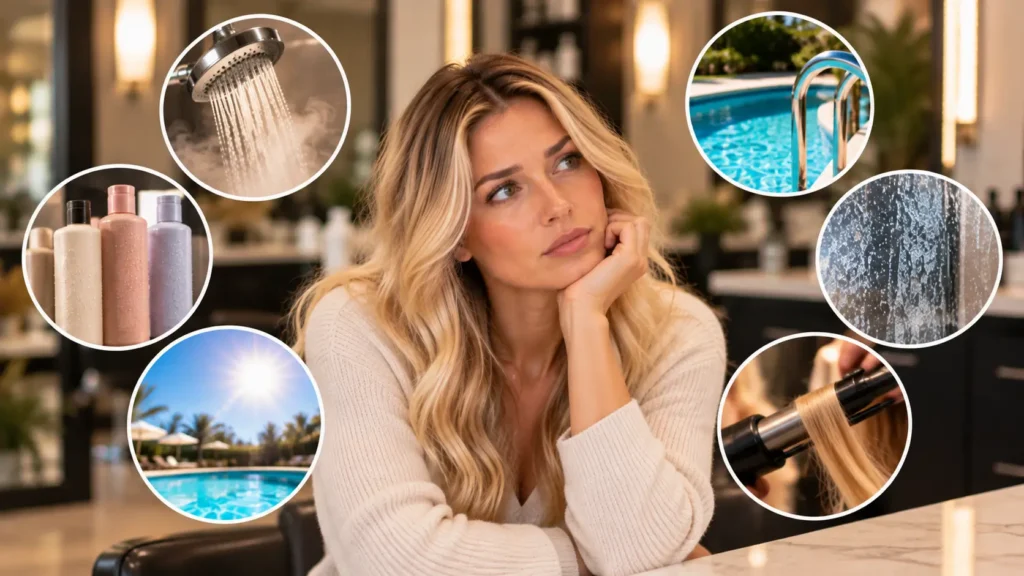
What makes blonde turn brassy faster?
Toner fading and changes to the hair itself can make unwanted warmth more noticeable.
Common contributors include:
- Very hot water: can contribute to color fading
- Frequent washing: can cause toner to fade sooner
- Strong cleansing or clarifying shampoos: may accelerate fading, depending on the formula and how often you use them
- Sun and pool water: can contribute to fading, dryness, and discoloration
- Mineral buildup: can leave blonde looking dull or discolored
- Excessive heat styling: can contribute to damage and changes in your color
If your blonde turns brassy quickly, tell your stylist about your water, your shower habits, and your shampoo. Small changes may help your tone last longer.
Is brassy the same as warm blonde?
No. Warm blonde is a color choice, and brassiness is unwanted warmth. The difference is whether you asked for it.
Honey, buttery blonde, and creamy beige can be intentional shade choices. Brassiness is unwanted yellow or orange that does not match the result you want.
If you are not sure which you have, bring a photo of the blonde you want. It helps your stylist see whether your hair has drifted.
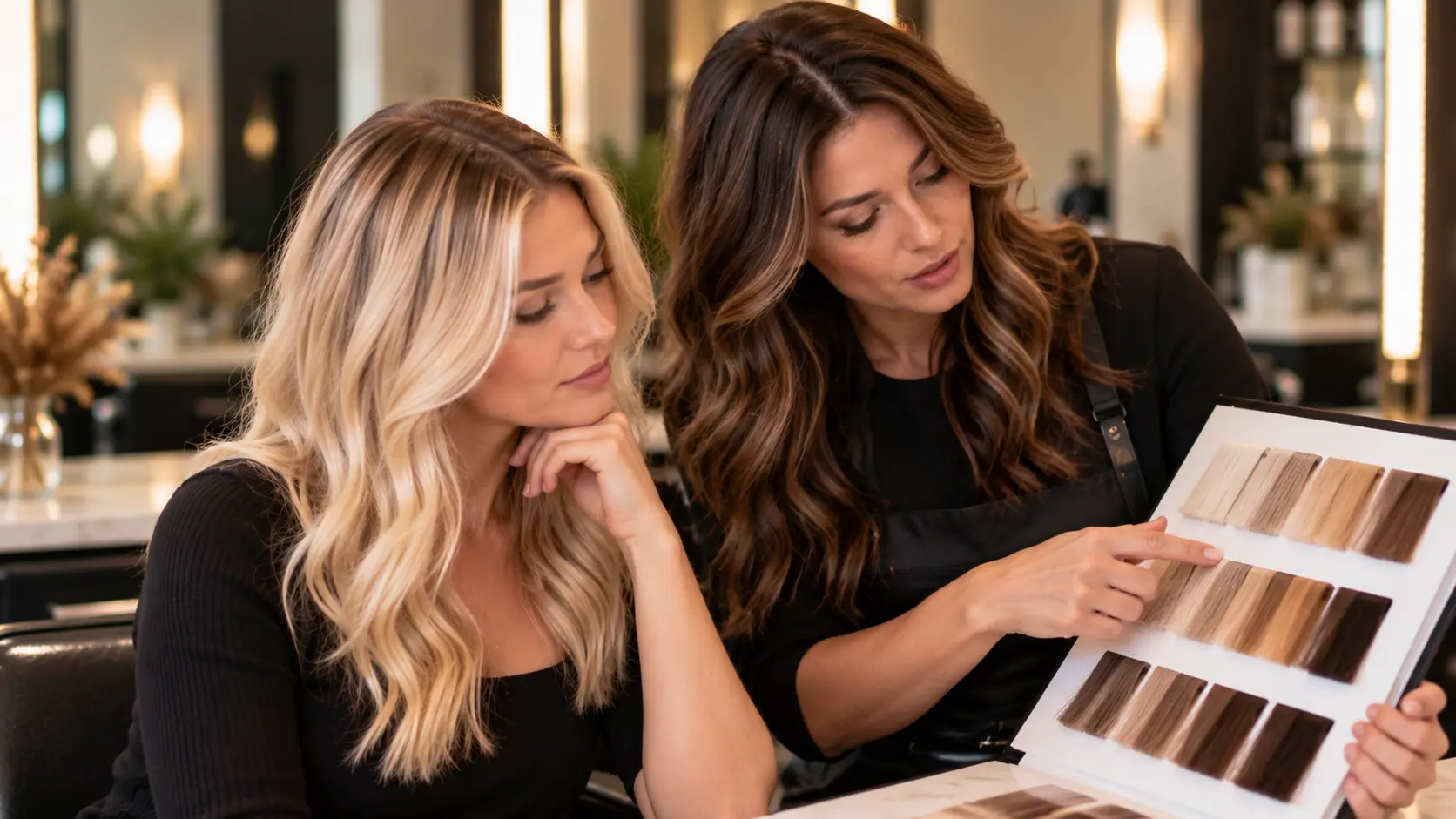
What is the difference between toner and gloss?
A toner adjusts your hair’s tone, whether that means neutralizing unwanted warmth or creating a specific blonde shade. A gloss is a color or clear treatment used to enhance tone and shine. Many salon glosses also work as toners, so the terms often overlap.
In practice, many salons use the terms together. At Hair Addiction Salon, Gloss/Toner is one service that can cancel brassiness, deepen richness, or add a soft glow. Your stylist will choose the formula for your hair.
A toner or tinted gloss can neutralize orange tones, but it cannot necessarily create a lighter blonde. If your hair is too dark for the shade you want, your stylist may recommend additional lightening or a staged correction, depending on your hair’s condition.
How often should I tone or gloss my blonde?
Most blondes do well with a gloss or toner every 4 to 8 weeks. Toner lasts longer for some people and shorter for others, depending on their hair and habits.
A good rule is to book when you notice warmth returning, not when it is obvious to everyone else. Many blondes pair a gloss with their regrowth appointments.
Does purple shampoo fix brassy hair?
Purple shampoo can help with mild yellow tones, but it does not replace a salon gloss. It deposits a small amount of pigment on the surface and only works on certain tones.
Orange tones usually need a blue-based toner, not purple. Using purple shampoo too often can also leave hair looking dull or muddy. If you use it, ask your stylist how often is right for you.
Why is my blonde orange right after the salon?
If your blonde looks orange right after an appointment, let your stylist know. This can happen when the hair has not been lightened enough for your desired shade or when the toning formula needs adjusting.
An appropriately formulated toner or gloss may correct the warmth. If your goal requires a lighter starting level, additional lightening may be needed, depending on your hair’s condition. Contact the salon before trying to correct it yourself.
How can I keep blonde from turning brassy?
These habits help color last longer:
- Wash with lukewarm or cool water
- Wash less often, if your scalp allows
- Use a color-safe shampoo and conditioner
- Use a heat protectant and turn your tools down
- Protect your hair from sun and chlorine
- Refresh your toner or gloss when unwanted warmth returns, following your stylist’s recommended schedule
If mineral buildup may be affecting your blonde, ask your stylist about a treatment specifically formulated to remove mineral deposits. A regular clarifying shampoo may not be enough. Hair Addiction Salon lists a Clarifying Treatment for mineral, product, and chlorine buildup; your stylist can recommend whether it suits your hair.
Which services help with brassy blonde?
Your stylist can recommend the right fit. At Hair Addiction Salon, these services can be part of a plan. Prices are starting prices at Lead Stylist rates, and there is an additional charge based on the amount of color used:
- Gloss/Toner: refreshes tone and shine, starting at $55
- Bleach and Tone: refreshes blonde regrowth under three-quarters of an inch, starting at $95
- Dimensional Color: a root touch-up plus custom foiling for brightness and depth, starting at $125
- Clarifying Treatment: removes buildup from minerals, product, and chlorine, starting at $35
- Corrective Color: for bigger color changes or fixes, by consultation, starting at $100 per hour
If you wear extensions, mention that at your appointment so your stylist can plan the service.
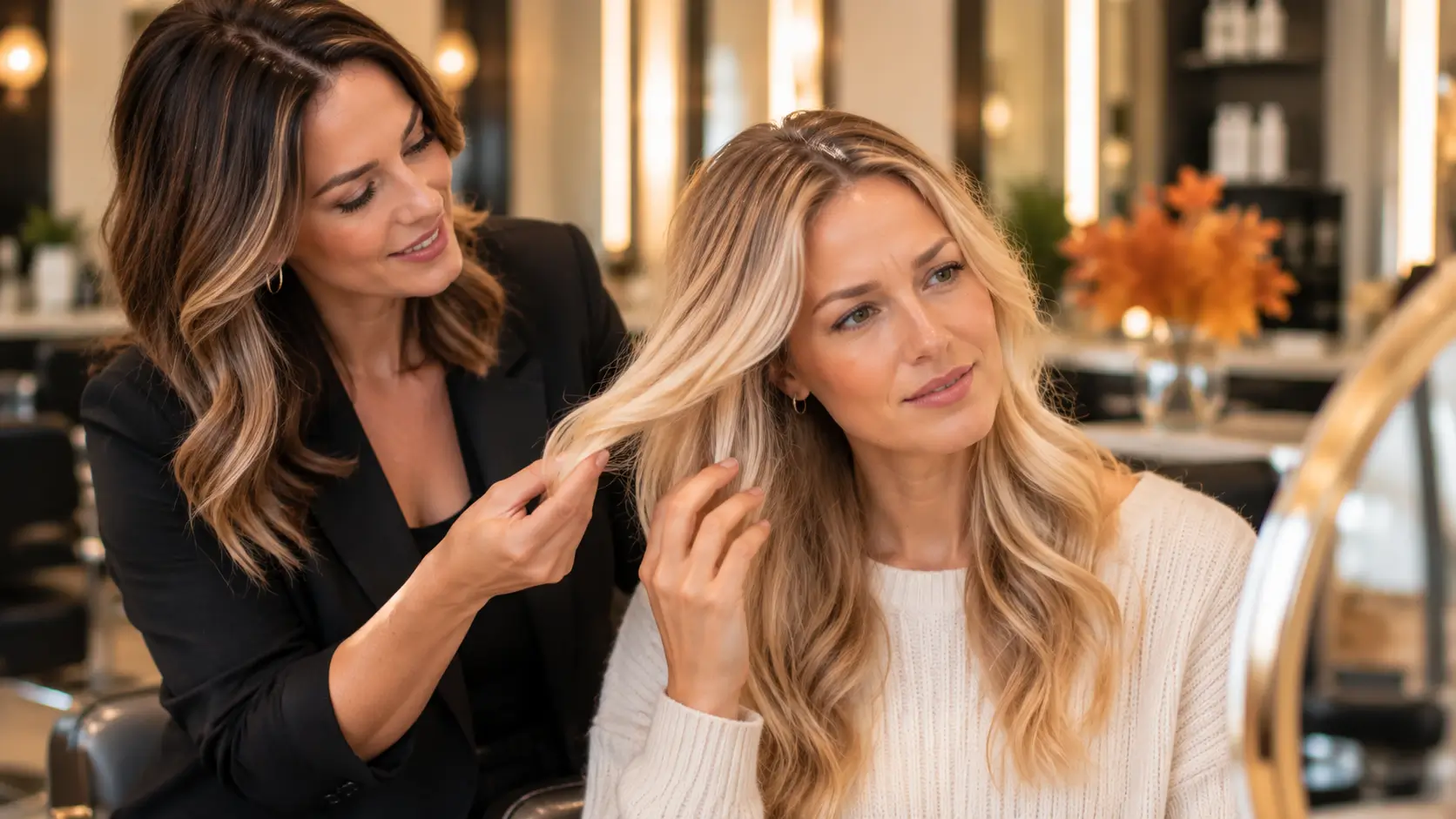
When should I see a stylist instead of fixing it myself?
Book with a stylist if your blonde looks orange, patchy, or green, or if you have already tried several at-home toners. Choosing the wrong formula for your hair’s starting color, porosity, or previous treatments can leave the result muddy or uneven.
If you are not sure, a consultation is a good place to start.
Brassy blonde FAQ
Why does my blonde turn brassy so fast?
Fading toner, hair porosity, frequent washing, sun exposure, pool water, and mineral buildup can all contribute. Your stylist can help identify what is affecting your blonde.
How long does a gloss last?
Many people refresh their gloss or toner every 4 to 8 weeks, but visible results may fade sooner or last longer depending on the formula, your hair’s condition, and how often you wash.
Is a gloss the same as a toner?
The terms overlap. Toning describes adjusting your hair’s tone, and many tinted glosses do exactly that while adding shine. A clear gloss adds shine without changing the tone.
Can I tone my blonde at home?
A stylist-recommended purple shampoo or color-depositing treatment can help maintain your blonde at home. For orange tones, patchiness, or a significant correction, book an assessment before choosing a toner.
Does toning damage hair?
Toning is generally gentler than bleaching, but its effect on your hair depends on the formula, developer, processing time, and your hair’s condition. Many glosses deposit color without lightening. Your stylist can choose an appropriate formula for your hair.
How do I get rid of yellow tones in blonde hair?
A salon gloss or toner is the most reliable fix. Between visits, a purple shampoo used sparingly can help with mild yellow.
Why does my blonde look dull, not just yellow?
Mineral buildup, product, and faded toner can all make blonde look flat. A stylist can tell you whether you need a gloss, a clarifying treatment, or both.
Ready to freshen your blonde?
If your blonde has started to look warmer than you want, book a gloss or ask for a quick consultation. You can book online or call Hair Addiction Salon at (701) 238-1794.

